Climate change is no longer a distant environmental issue—it is a present-day business reality. Customers, regulators, investors, and employees increasingly expect organisations to take measurable action to reduce their carbon footprint.
While energy use and transportation often dominate sustainability conversations, one major contributor frequently operates in the background: organic waste. Food scraps, garden waste, and biodegradable materials quietly accumulate across offices, factories, campuses, and commercial kitchens—often without much scrutiny.
Yet how businesses manage this waste can significantly influence their environmental impact.
When Organic Waste Becomes a Climate Liability
Organic waste is not inherently harmful. The problem lies in where it ends up.
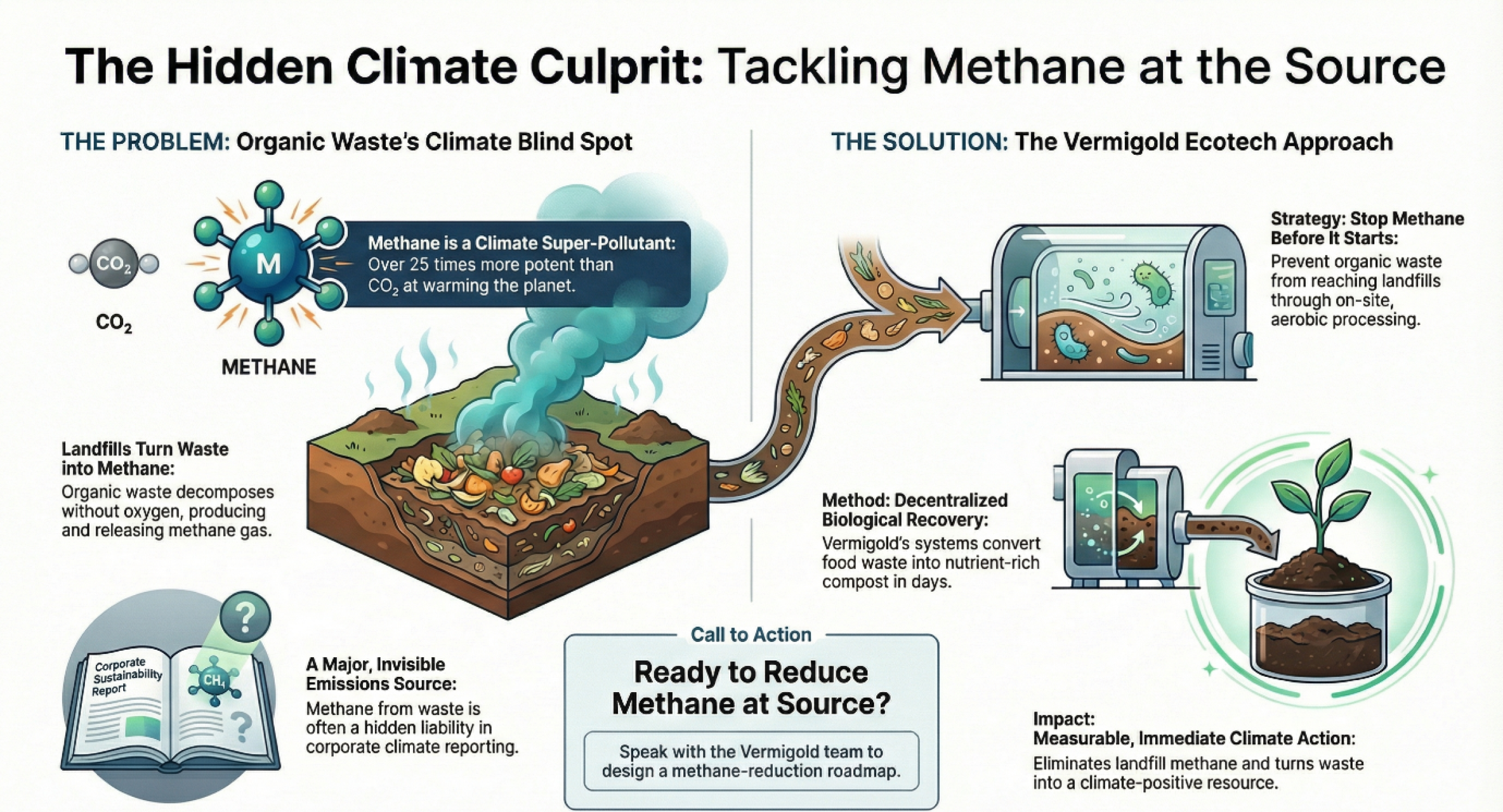
When food and biodegradable waste are sent to landfills, they decompose without oxygen, releasing methane—a greenhouse gas far more potent than carbon dioxide. This makes organic waste a disproportionately large contributor to climate change relative to its volume.
For businesses, this creates a hidden contradiction. Even organisations with sustainability goals may unknowingly contribute to emissions through conventional waste disposal practices. Rising landfill costs, tightening regulations, and increasing scrutiny only add to the pressure.
The challenge is clear: how can businesses reduce emissions tied to organic waste while maintaining operational efficiency?
Turning Organic Waste into a Climate Solution
The shift happens when organic waste is treated not as trash, but as a resource.
Composting programs allow businesses to process food and garden waste into nutrient-rich soil amendments—either on-site or through local composting partners. This diverts waste from landfills while supporting healthier soil systems.
For operations generating larger waste volumes, anaerobic digestion offers an additional pathway. By converting organic waste into biogas, businesses can generate renewable energy for heating, electricity, or fuel—directly offsetting fossil fuel use.
Equally important is waste prevention. Inventory management systems reduce over-purchasing. Surplus food donation prevents edible items from becoming waste. Staff training improves storage practices and portion control, cutting emissions before they occur.
Finally, partnering with sustainable waste management providers enables businesses to track, analyse, and continuously improve waste performance—turning sustainability into a data-driven process rather than a one-time initiative.
Together, these solutions transform organic waste from an emissions source into part of a circular, low-carbon system.
From Waste Reduction to Climate Leadership
Businesses that adopt organic waste solutions gain more than environmental benefits. They reduce disposal costs, improve regulatory compliance, and strengthen brand credibility with increasingly climate-conscious stakeholders.
Most importantly, they demonstrate that carbon reduction does not always require complex technology or massive capital investment. Sometimes, the most effective climate action begins with rethinking everyday systems.
By embracing composting, anaerobic digestion, and waste reduction strategies, businesses can significantly lower their carbon footprint—while turning organic waste into a valuable resource.
In the transition to a low-carbon future, leadership will belong to organisations that act early, build resilient systems, and align environmental responsibility with operational sense.
And for many businesses, that journey begins with what they choose to do with their waste.