Verified Climate Impact
of Vermigold
0 Cars
removed for one year
0 Lakh Trees
planted for one year
This is the real-world climate impact of Vermigold systems in just one year
0
Emissions Avoided
Emissions avoided consider emissions that would have been released in the absence of the company operating. In this case, emissions are estimated for the methane that would have been emitted had organic matter been left to decay in a landfill site.
0
Emissions added: Scope 1 and 2
Emissions released by Vermigold in the activity of collecting and composting organic waste, through owned sources of combustion (eg. vehicles, air conditioning and machinery) and purchased electricity.
0
Emissions added: Scope 3
Emissions released by upstream and downstream third parties across the value chain of Vermigold. This includes upstream transportation (i.e. delivery of inputs) and downstream transportation of composting units to customers. At this point, emissions from purchased goods required to manufacture composting units have not been included. Other categories were considered immaterial.
0
Estimated net emissions
Estimated total carbon emissions mitigated through composting organic waste in the Financial Year 2022-23 based on data provided by Vermigold.
Independent Impact Validation

0
Metric Tons
CO₂-eq Reduced
CO₂-eq Reduced
0
tons methane
avoided
avoided
Based on FY 2022-23 installed
systems
Why this independent assessment matters
An impact assessment by J-PAL (MIT, USA) - globally
respected research institution adds measurable integrity to sustainability claims.
Methane Emissions from Landfill: The Climate Risk
When organic waste is sent to landfill, it decomposes anaerobically and
produces methane - a greenhouse gas with significantly higher warming potential than carbon
dioxide.
By diverting organic waste to decentralized composting systems, Vermigold prevents methane formation at source.
This landfill methane avoidance accounts for the majority of the verified carbon reduction.
By diverting organic waste to decentralized composting systems, Vermigold prevents methane formation at source.
This landfill methane avoidance accounts for the majority of the verified carbon reduction.
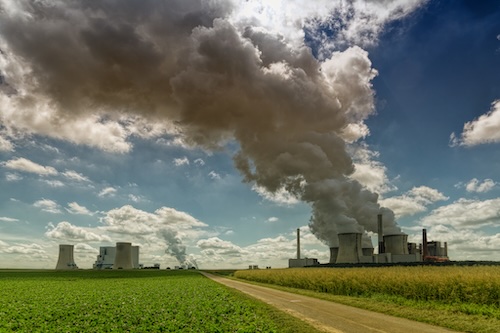
Reduce Scope 3 Emissions Through Organic Waste Diversion
For organisations reporting under ESG frameworks, waste disposal contributes
to Scope 3 emissions. Vermigold's composting solutions enable:
- Quantifiable emissions avoidance
- Reduced landfill dependency
- Strengthened sustainability disclosures
- Measurable climate mitigation
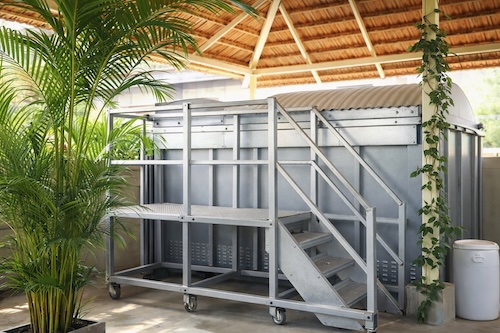
Composting is operational carbon reduction - not a theoretical offset.